Erme, the LoyAI ermine LoyAI Studio
How to startPricingWhy digital cards
Start free
Why digital cards
Research Nov 19, 2025 · 4 min read

Paper loyalty cards vs digital: the hidden cost of the punch card

The printing is the cheap part. The real invoice: progress your customers lose, fraud you can't see, and data you never collect.

LoyAI Research LoyAI Research· Helsinki
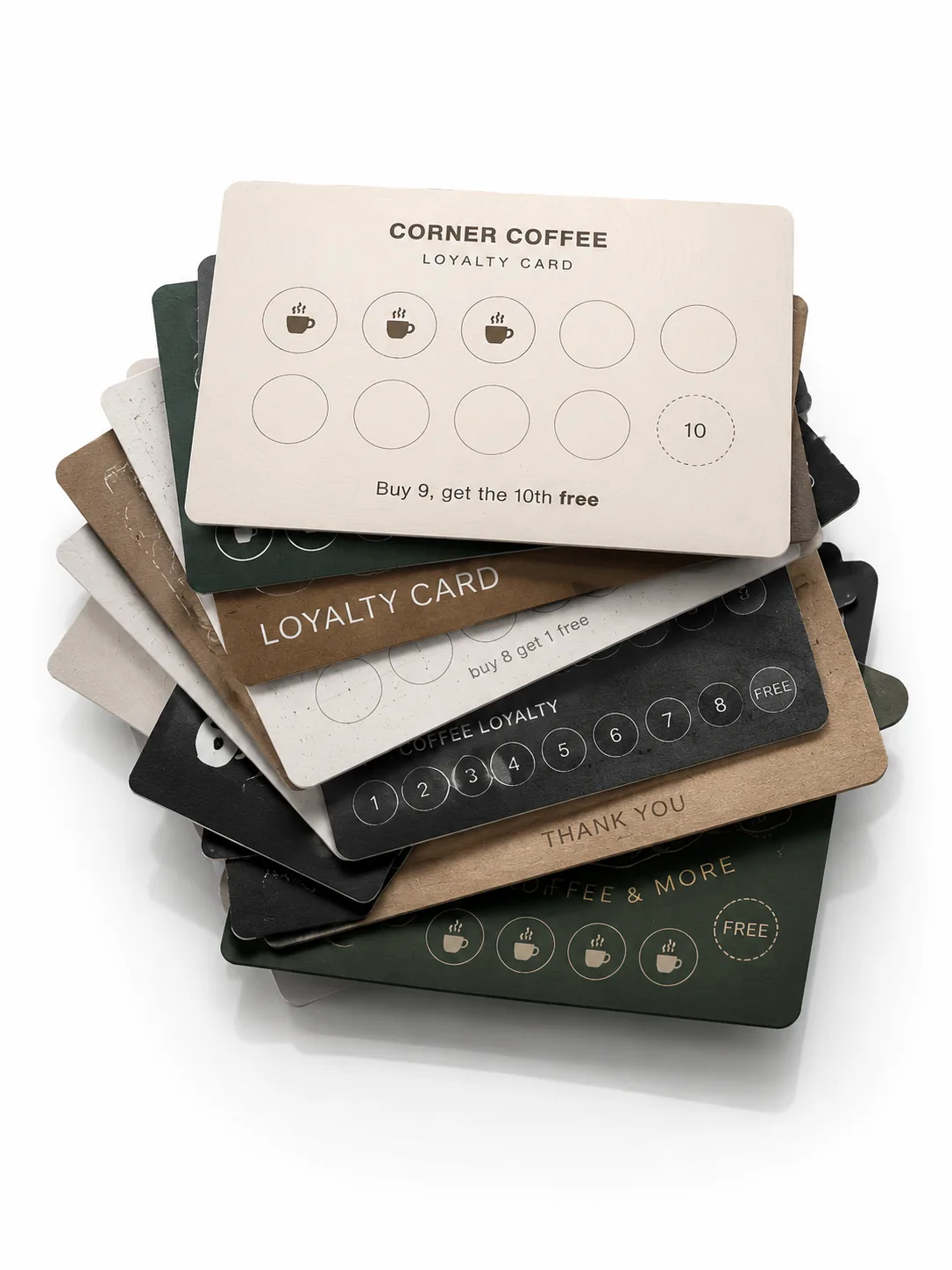
A stack of worn paper stamp cards
TL;DR
The stamp card's power is endowed progress — and a lost paper card resets it to zero (the effect that drives 34% vs 19% completion).
Consumers already juggle ~14.8 loyalty programs and stay active in ~6.7 — a card that lives in a drawer loses that fight.
Paper adds fraud (self-stamping), reprint cycles and zero data about your regulars.
A wallet card is the same psychology, minus every failure mode: can't be lost, forgotten or washed.

The economics of a lost card

The endowed-progress experiments proved progress itself is the hook: customers with pre-filled stamps completed cards at 34% versus 19% for blank ones. Read the effect in reverse and the cost of paper becomes visible — when the card is washed, binned or left in the other jacket, the endowed progress that was pulling that customer back dies with it. They don't restart at zero; they mostly don't restart.

6.7 of 14.8 loyalty programs the average consumer is actually active in, out of those they’ve joined. Cards that can be forgotten are the first to go inactive.

The invisible line items

Lost progress: every misplaced card releases a customer mid-habit — the exact moment the goal gradient was accelerating them.
Fraud: a pocket stamp or a generous friend fills cards you never sanctioned; digital stamps are scanner-verified and logged.
Reprints: design, print, ship, repeat — forever.
Blindness: paper tells you nothing about return rates, visit gaps or who your top customers are.
Brand: your logo living as a coffee-stained scrap at the bottom of a bag.

Same psychology, better container

The wallet version keeps everything that makes punch cards work — visible progress, a concrete reward, the endowed first stamp — and deletes the failure modes. The card sits next to bank cards where it cannot be lost, updates its count live at every scan, and adds what paper never could: push messages, geofenced reminders and analytics. Switching takes an afternoon with LoyAI Studio; honor the old paper cards at the till while members migrate.

Key takeaways
1. Count lost members, not printing invoices — that is paper's real cost. 2. Progress that can't be lost keeps the habit compounding. 3. Scanner-verified stamps end the fraud question quietly. 4. If it isn't measured, it isn't a program — it's a giveaway.

FAQ

Are paper punch cards still effective?

The psychology works — goal gradient and endowed progress are proven — but paper leaks: cards get lost mid-progress, can be self-stamped, and produce no data. Digital stamp cards keep the psychology and fix the leaks.

What does switching from paper to digital cost?

LoyAI Studio is free for up to 50 customers, then €44.95 per 4 weeks per location — typically less than recurring print runs plus the silent churn of lost cards.

What about customers without smartphones?

Keep a small paper stack as a fallback; in practice the share is a few percent and shrinking. Everyone else enrolls in ten seconds from the same QR poster.

Read sources Nunes & Drèze — "The Endowed Progress Effect", Journal of Consumer Research (2006): car-wash stamp cards with 2 pre-filled stamps were completed at 34% vs 19% for equivalent blank cards. Bond Brand Loyalty — The Loyalty Report: the average consumer belongs to ~14.8 loyalty programs but is active in only ~6.7. Kivetz, Urminsky & Zheng — "The Goal-Gradient Hypothesis Resurrected", Journal of Marketing Research (2006): café reward-card field study; customers buy coffee more frequently the closer they get to the free reward.

Retire the punch card. Keep the psychology.

LoyAI Studio — digital loyalty stamp cards in Apple Wallet and Google Wallet. Free for your first 50 customers.

Start free
Keep reading How to get more repeat customers: the stamp-card science Customer retention statistics: keeping a customer costs 5–25× less All research & guides →