How to get more repeat customers: the stamp-card science
Two of the most replicated findings in consumer research — the goal gradient and endowed progress — are about stamp cards. Here is the playbook they add up to, for cafés, salons and gyms.
 LOYAI Research· Helsinki
What the research actually says
The goal-gradient hypothesis — organisms accelerate as they approach a reward — was confirmed on humans with a café stamp card. The landmark café field study tracked real reward-card purchases and found customers shortened the gap between coffees the closer they got to the free one. A second experiment showed the start matters as much as the finish: a 10-stamp car-wash card with two stamps pre-filled was completed by 34% of customers, versus 19% for an 8-stamp blank card — identical effort, near-double completion, because progress that already exists feels too valuable to abandon.
The playbook
Why digital multiplies the psychology
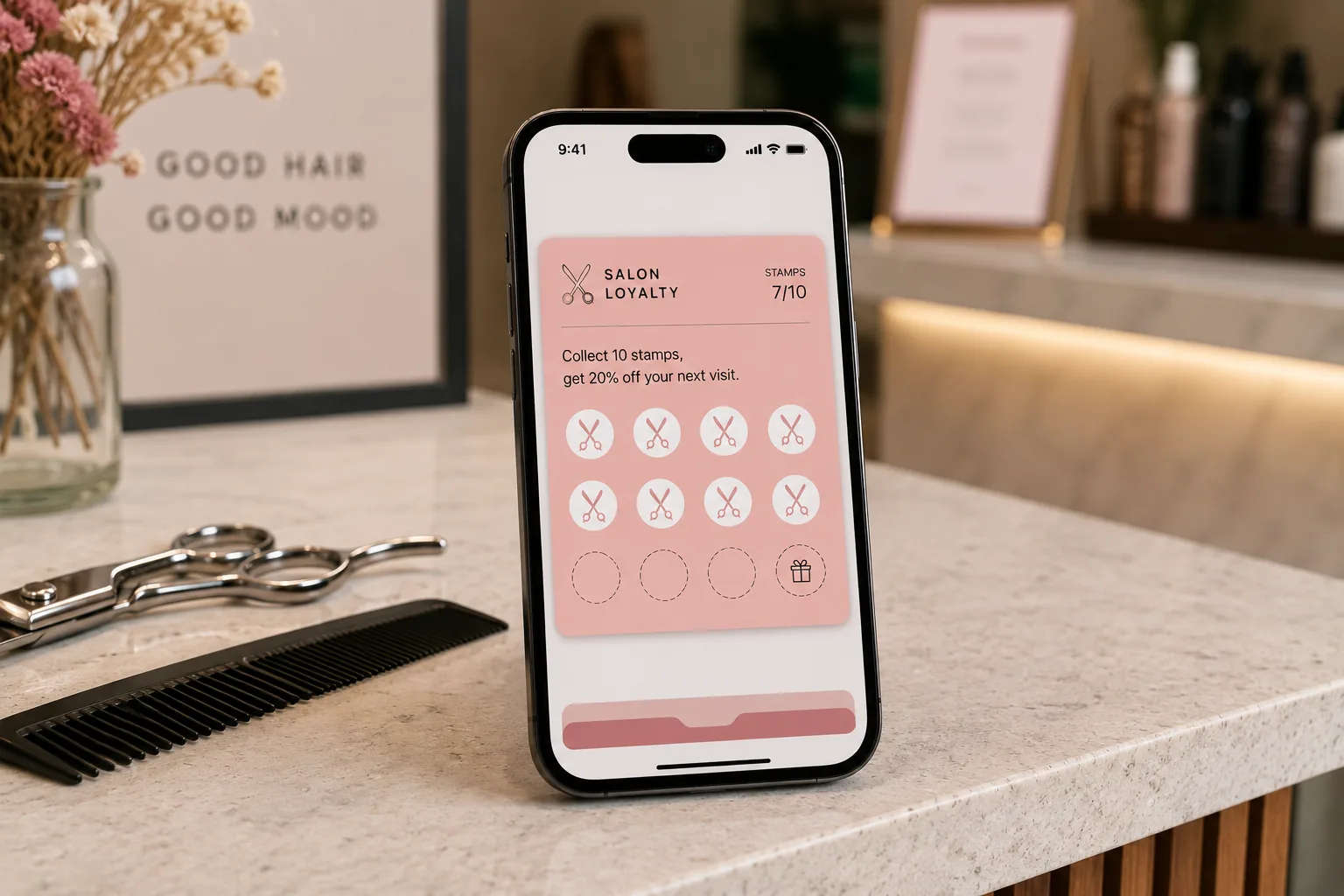
Paper hides progress in a pocket; the wallet card puts '7 of 10' on the same screen as the customer's bank cards, and — per the goal gradient — visible proximity is the accelerant. Add a push when someone stalls two stamps from the reward, or a nudge when they walk within 100 meters, and the two research effects stop being trivia and start being your Tuesday revenue.
FAQ
How do I get more repeat customers in my café?
Run a stamp card customers can't lose: 8–10 stamps, first stamp pre-filled, free hero product as the reward, one push message a month. The design is backed by two of the most replicated findings in consumer research.
Do punch cards actually work?
Yes — with measured effects: customers accelerate purchases near the reward and pre-filled progress nearly doubles completion. Digital versions add push and location triggers.
Does this work for salons and gyms, not just cafés?
The psychology is visit-based, not product-based: haircuts, classes and washes all fit. Any business with repeat visits can run the same card.
Put the research to work on your counter.
LOYAI — digital loyalty stamp cards in Apple Wallet and Google Wallet. Free for your first 50 customers.
Start free