Customer retention statistics: keeping a customer costs 5–25× less
The acquisition-vs-retention numbers, translated into café and salon math — and how a €44.95 stamp card captures the upside.
 LOYAI Research· Helsinki
The two numbers to memorise
New-customer acquisition runs 5 to 25 times the cost of retention. The classic studies — first in services, later in e-commerce — found a 5% retention improvement raises profits between 25% and 95%, because retained customers re-purchase for free, spend more over time, and recruit others. Together they say the same thing: for a small venue, the cheapest growth is the customers you already have.
Café and salon math
Take a €6.50 average ticket. One additional returning customer per day is roughly €200 a month — about 4.4 times the €44.95 per-4-weeks cost of a LOYAI location. A salon at €45 a visit needs one rescued regular a month to break even on the tool. If a stamp card moves return rate by even a few points across a few hundred members, it stops being a cost line and becomes one of the highest-ROI lines in the business.
Why retention compounds
A retained customer is not one sale saved; it is a frequency curve extended. Visit gaps shrink as the habit forms (the goal-gradient effect measured on real café cards), tenure stretches from months into years, and regulars do your acquisition for you — the friend they bring costs nothing and starts a curve of their own. That is why a 5% input produces a 25–95% output, and why the dashboard's return-rate number deserves more attention than any ad campaign.
FAQ
How much cheaper is retention than acquisition?
Acquisition runs 5–25× the cost of retaining an existing customer — one of the most replicated findings in business research.
Is the 25–95% profit claim real?
Yes — the original service-industry studies found 25–85%; the e-commerce follow-up extended it to 95%. Direction and magnitude have held up across two decades of replication.
How do I track retention ROI in practice?
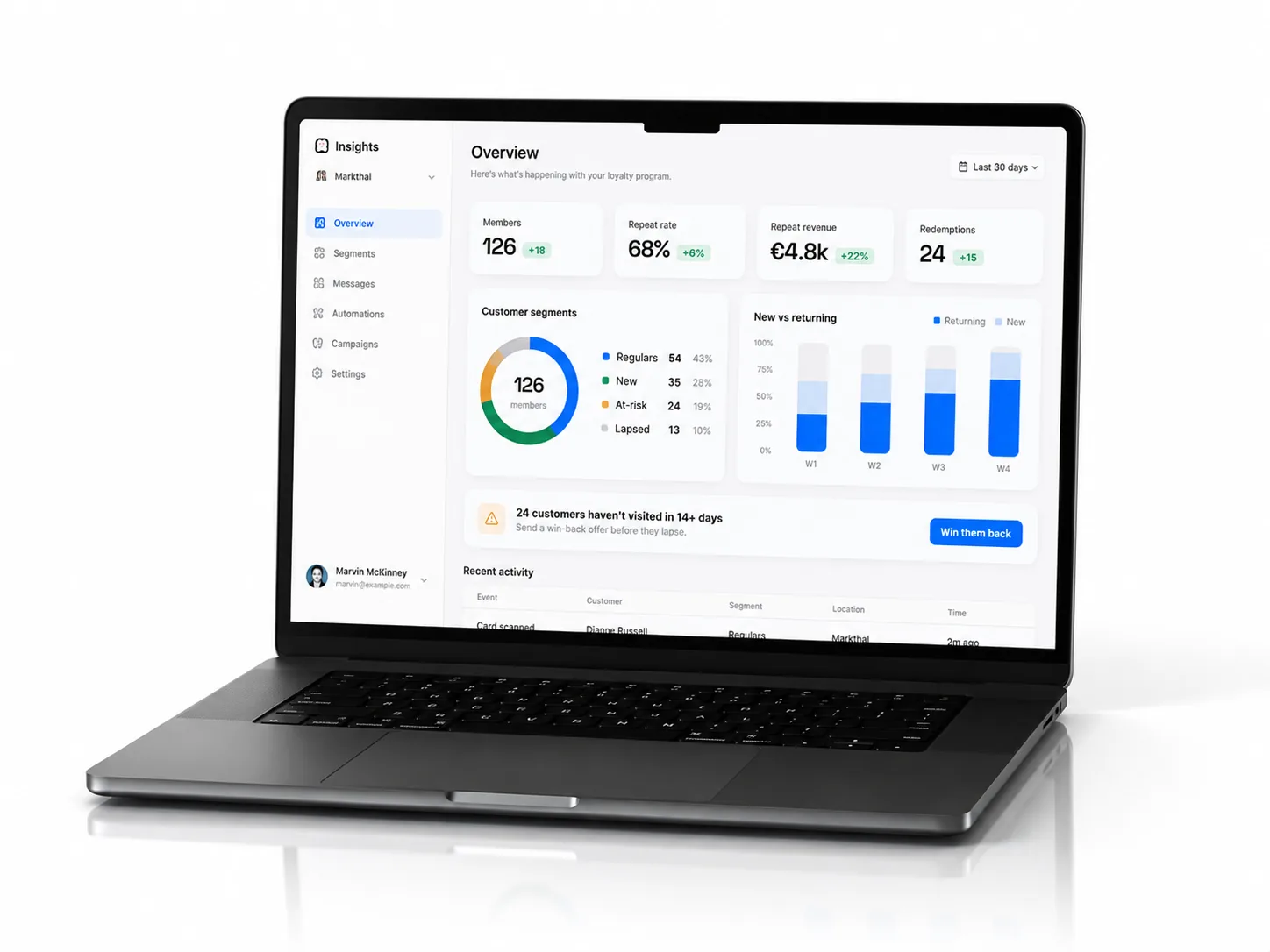
Compare member return rate and spend against non-members on your loyalty dashboard; the delta times your member count is the program's monthly value. LOYAI's free tier lets you measure before paying.
Retention is the cheapest growth you own. Instrument it.
LOYAI — digital loyalty stamp cards in Apple Wallet and Google Wallet. Free for your first 50 customers.
Start free