Erme, the LoyAI ermine LoyAI Studio
How to startPricingWhy digital cards
Start free
Why digital cards
Research Oct 8, 2025 · 4 min read

SMS vs email vs push notifications for small business: the open-rate math

SMS opens run near 98% against ~20% for email — but SMS costs money per message. Wallet push hits the same lock screen at zero marginal cost.

LoyAI Research LoyAI Research· Helsinki
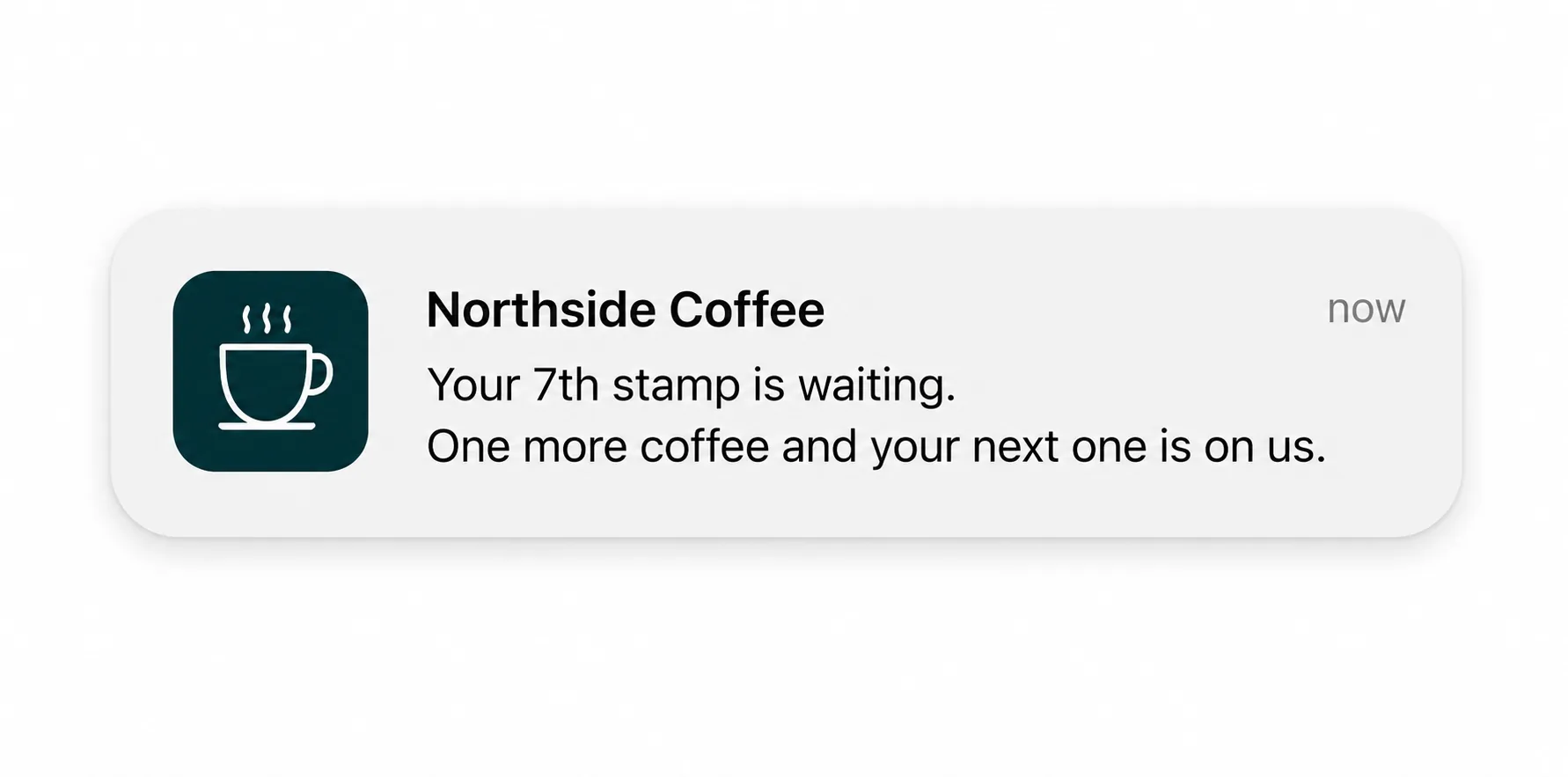
A push notification from a café on a phone lock screen
TL;DR
SMS open and response rates run as high as 98% and 45%, versus roughly 20% and 6% for email.
Cross-industry benchmarks put average email opens near 21%, clicks near 2.6%.
SMS reach costs €0.05–0.10 per message and arrives from an anonymous number.
Wallet push lands on the same lock screen as SMS — free, unlimited, branded, attached to the customer's own card.

The scoreboard

Email — ~21% average opens, ~2.6% clicks. Fights the promotions tab and needs a designed campaign per send.
SMS — open rates up to 98% and response rates near 45%. But every message costs money, sender IDs feel anonymous, and it reads as an intrusion when overused.
App push — strong numbers, if you can get and keep an app installed. The churn curves say you mostly can't.
Wallet push — rides the loyalty pass the customer added themselves: lock-screen delivery, your brand on the notification, zero marginal cost.
98% vs 20% SMS versus email open rates — lock-screen delivery is the difference. Wallet push lives on the same lock screen, free.

Why wallet push converts

Context does the selling. The message arrives attached to a card showing the customer two stamps from a free coffee — it reads as a status update about something they own, not an ad from a stranger. That framing, plus zero cost per send, changes what a campaign is: one concrete sentence, written at 15:58, on every relevant lock screen at 16:00.

Cadence that keeps consent

One to four messages a month, each carrying real value — a new item, a quiet-day offer, a reward reminder. The opt-out is deleting your card, so every message should be worth keeping the card for. Respect the lock screen and it stays yours; abuse it and no channel statistics will save you.

Key takeaways
1. Go where attention already is: the lock screen wins every open-rate table. 2. Zero marginal cost changes campaign behavior — send the Tuesday sentence. 3. The loyalty card gives every message context no email can match. 4. Value per message is the only cadence rule that matters.

FAQ

What has a higher open rate, SMS or email?

SMS by a wide margin — up to 98% opens vs roughly 20% for email. Wallet push notifications reach the same lock screen as SMS without a per-message fee.

Are wallet push notifications opt-in?

Yes — adding the card is the opt-in, removing it is the opt-out. It is the cleanest consent model in local marketing.

Can I schedule or automate messages?

Yes — LoyAI Studio sends broadcasts now, schedules them by day and time, or automates them around behavior like stretching visit gaps.

Read sources Gartner — SMS open and response rates reported as high as 98% and 45%, versus roughly 20% open / 6% response for email ("Tap Into the Marketing Power of SMS", 2016). Mailchimp Email Marketing Benchmarks — average email open rates across industries ≈ 21%, click rates ≈ 2.6%. Quettra mobile intelligence data (125M devices), published with Andrew Chen (Andreessen Horowitz): "New data shows losing 80% of your mobile users is normal", 2015.

Own the lock screen without paying per message.

LoyAI Studio — digital loyalty stamp cards in Apple Wallet and Google Wallet. Free for your first 50 customers.

Start free
Keep reading Geofencing marketing: the 100-meter advantage Coffee shop marketing: the 3 retention numbers that decide your margin All research & guides →